Electrophysiology
What ABR and ECochG Testing Involves
ABR testing in Mesa, AZ records how the hearing nerve and brainstem respond to sound. Soft electrodes rest on the forehead and behind each ear, clicks or tone bursts play through insert earphones, and the equipment averages thousands of responses into a waveform your audiologist reads. Nothing enters the ear beyond a foam tip, and the test works whether you are awake and still or sound asleep.
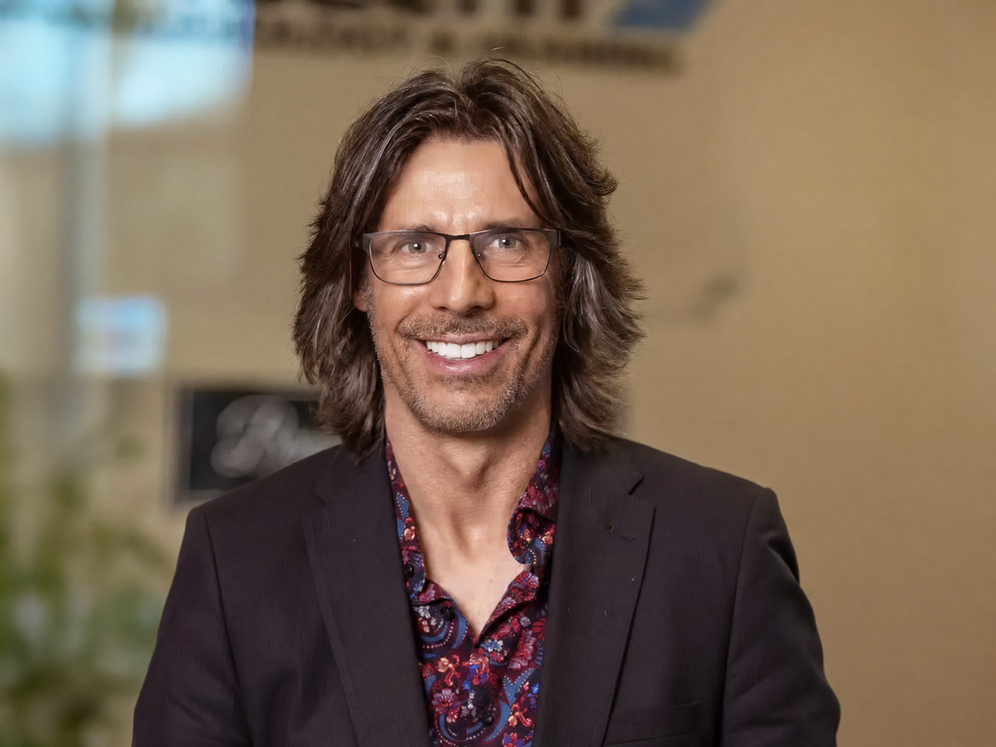
Dr. Matthew Wester, Au.D., CCC-A
Doctor of Audiology in Mesa, AZ
A Full Electrophysiology Suite Under One Roof
Few private practices in the East Valley keep this equipment on site. Alongside ABR, we perform electrocochleography where cochlear hydrops or Ménière's disease is suspected, plus DPOAE and TEOAE testing of outer hair cell function. Our lead clinician spent sixteen years in diagnostic and vestibular work at Mayo Clinic Arizona, which is one reason ENT and neurology practices send patients to Mesa for these studies rather than to a hospital.
ABR and ECochG FAQs
Common questions about electrophysiologic testing in Mesa, including what an ABR measures, whether the test is uncomfortable, why an ECochG gets ordered, and how to prepare.
Auditory brainstem response testing, also written as ABR or BAER, tracks the electrical signal that travels from the cochlea along the hearing nerve and up through the brainstem after a sound. The recording produces a series of labeled peaks, and the timing between them tells your audiologist how efficiently that pathway is carrying the signal.
Delays or absent peaks can point to a problem beyond the cochlea, which is why the test is used to screen for acoustic neuroma and other retrocochlear conditions. It also estimates hearing thresholds in patients who cannot give reliable behavioral responses, including adults who cannot cooperate with a standard hearing test. Call (480) 265-8067 with questions about an order your physician placed.
No. The test is completely painless and non-invasive. We clean a few spots of skin with a mild prep gel, place adhesive electrodes on the forehead and behind the ears, and slip a soft foam tip into each ear canal. Nothing is inserted deeply, no needles are used, and the sounds are ordinary clicks and tones at conversational to moderately loud levels.
The main request we make is that you stay relaxed, since muscle tension adds electrical noise to the recording. Most adults find the easiest approach is to close their eyes and doze. Plan on roughly 45 to 90 minutes depending on how many measures your physician ordered. Electrode sites are wiped clean afterward and you can drive yourself home.
Electrocochleography measures the cochlea's own electrical output, and the ratio between two parts of that response can suggest raised fluid pressure in the inner ear. Physicians typically order it when the symptom picture includes fluctuating hearing, aural fullness, roaring tinnitus, or episodic vertigo, the pattern associated with Ménière's disease and cochlear hydrops.
ECochG is one input rather than a standalone diagnosis. It is usually read alongside your audiogram and vestibular results, which is an advantage of testing at a clinic that performs VNG, rotary chair, and VEMP in the same building. Your physician receives all of it in one report, so nothing has to be pieced together from separate facilities.
Preparation is light. Come with clean, product-free hair so the electrodes make good contact, since gel, hairspray, and dry shampoo interfere with the recording. Skip earrings if they are large, wear a comfortable top, and bring your insurance cards, photo ID, and the referral information from your physician.
Keep taking your regular medications unless your doctor tells you otherwise. Being rested helps, because a relaxed patient produces a cleaner tracing, so a short night before the appointment is worth avoiding. Please arrive fragrance-free as well, a courtesy to patients here for dizziness testing. Call (480) 265-8067 if anything is unclear.
The AFA Promise to Every Patient
Whether you're here for a balance evaluation, a diagnostic hearing test, or a new set of hearing aids, you'll be cared for by credentialed clinicians using the same equipment that draws physician referrals from across the East Valley. Every new hearing aid fitting also includes a 45-day trial period, so you can wear your devices through real life in Mesa before you commit.
Patient Stories
See what Mesa and East Valley patients say about the balance testing and hearing care they received at AFA.
Answers for Dizziness and Hearing Loss in Mesa
Advanced balance testing and audiology care on Baseline Road, with most referrals seen within days.
Serving Mesa & the East Valley
Audiologist in Mesa, AZ
Our Mesa office on Baseline Road houses the full vestibular battery — rotational chair, posturography, VNG, vHIT, and VEMP — alongside complete diagnostic hearing care.
- Rotational chair and posturography, rare in Arizona
- Doctor of Audiology care at every step
- VA Community Care, Medicare, and AHCCCS accepted
- Referral appointments within days, sometimes same-day
- All major hearing aid brands, verified with Real Ear
- Serving Mesa and the East Valley since 2013
“Very helpful and willing to educate on what they’re doing as they go and make sure you understand, very patient highly recommend 😊 Went in very nervous, left feeling educated knowledgeable…”— Jon Howard, Google Review
AFA Balance & Hearing Institute
4838 E. Baseline Road, Suite #126, Mesa, AZ 85206
| Monday | 8:00 AM - 4:30 PM |
| Tuesday | 8:00 AM - 4:30 PM |
| Wednesday | 8:00 AM - 4:30 PM |
| Thursday | 8:00 AM - 4:30 PM |
| Friday | 8:00 AM - 4:30 PM |
| Saturday | Closed |
| Sunday | Closed |
Closed daily from 12:00 PM to 1:00 PM.
Get directions