
Hearing Aid Styles
Every Style, Matched to Your Hearing Loss
Hearing aid styles in Mesa, AZ run from devices that disappear inside the canal, fitting losses to about 65 dB HL, up to power behind-the-ear instruments that handle 120 dB HL. AFA Balance & Hearing Institute works with every major manufacturer, so the style you wear is chosen around your audiogram, your ear anatomy, your dexterity, and how much visibility matters to you. Your Doctor of Audiology lays out the trade-offs before anything is ordered.
Which Style Fits Your Hearing Loss and Lifestyle
The right hearing aid style depends on your degree of hearing loss, your ear anatomy, your dexterity, and how visible you want the device to be. A Doctor of Audiology will walk through every trade-off so you leave confident in your choice.
Receiver-in-Canal (RIC)
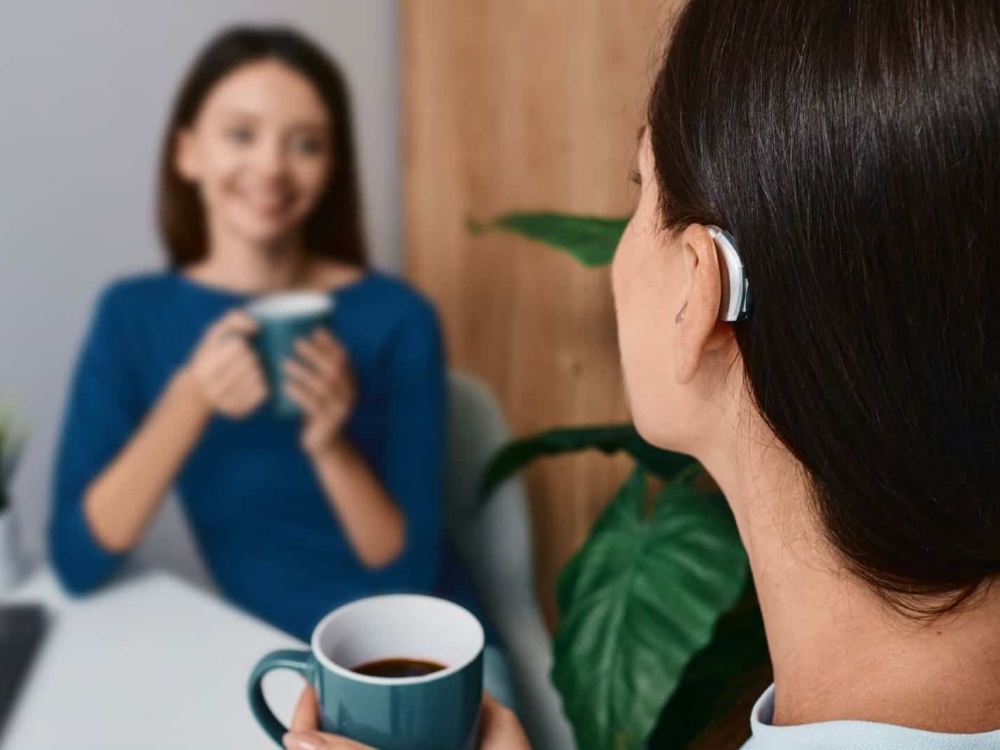
The most popular hearing aid style today. A small housing sits behind the ear and sends sound through a thin wire to a speaker placed in the ear canal. RIC devices are lightweight, discreet, and offer excellent sound quality with Bluetooth streaming and rechargeable battery options — suitable for mild to severe hearing loss. Their comfortable, low-profile design makes RIC a go-to choice for active patients who want both performance and discretion.
Behind-the-Ear (BTE)
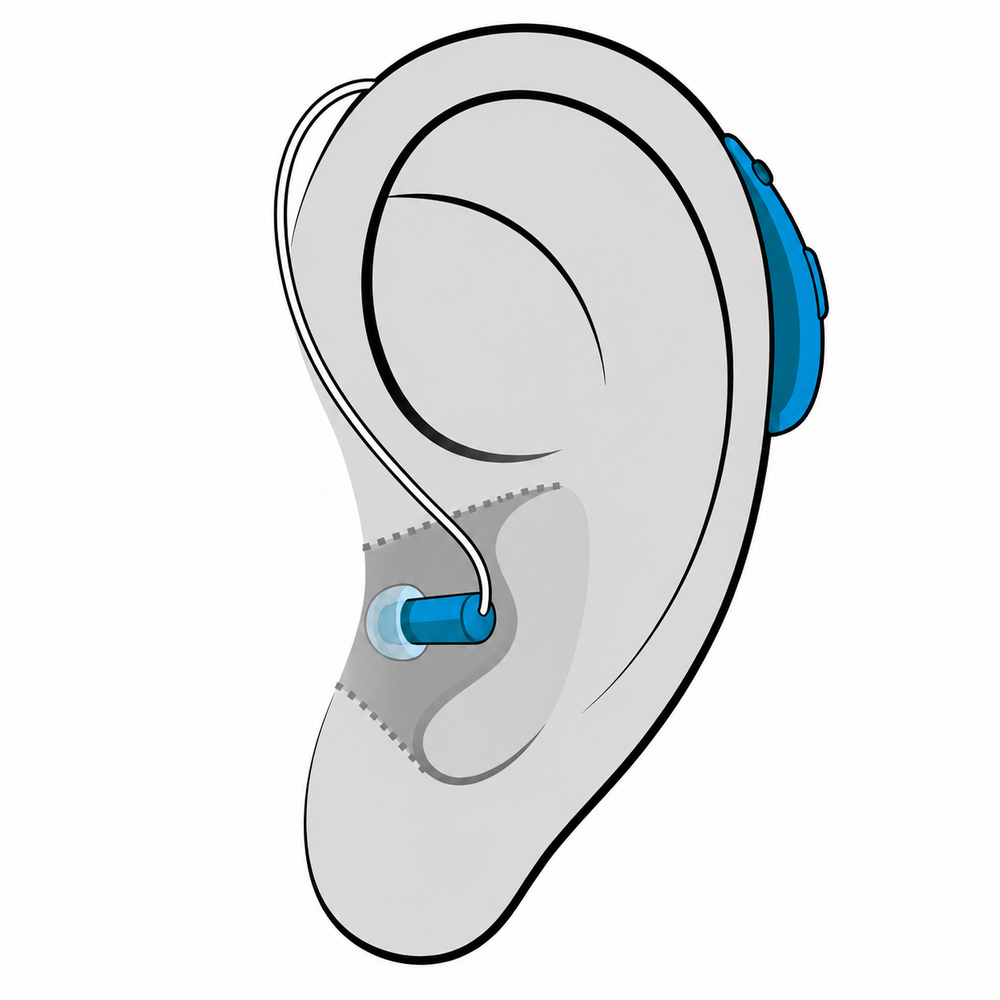
The most powerful hearing aid style. The housing sits behind the ear and delivers sound through a tube to a custom earmold or dome. BTE devices offer the longest battery life, the most amplification, and accommodate advanced features including Bluetooth streaming — making them ideal for moderate-to-profound hearing loss and an easy-to-handle option for patients who prefer a larger, more durable device.
In-the-Ear (ITE)
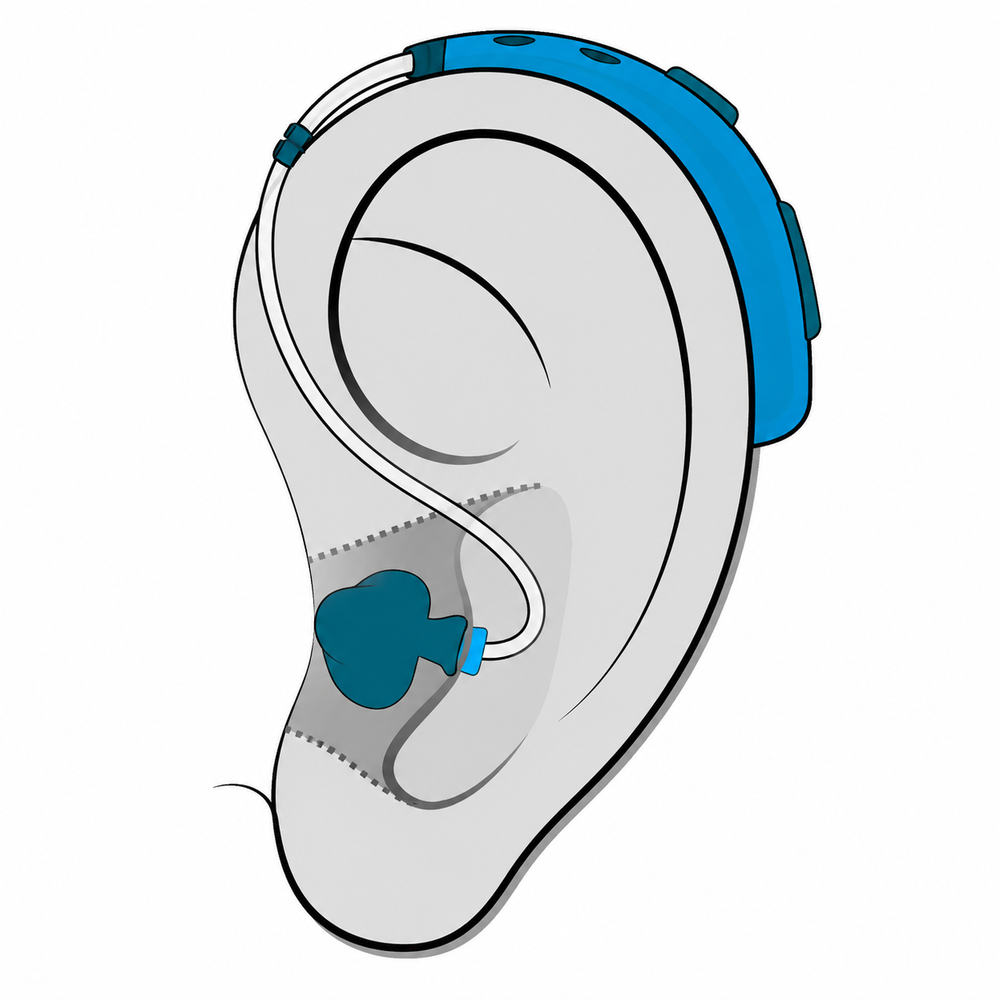
Custom-molded to fill the outer ear bowl, ITE hearing aids suit mild to severe hearing loss. Their larger shell is easier to handle and insert — a practical advantage for patients with arthritis or reduced dexterity — and they can include volume controls, directional microphones, wireless connectivity, and rechargeable battery options.
In-the-Canal (ITC)
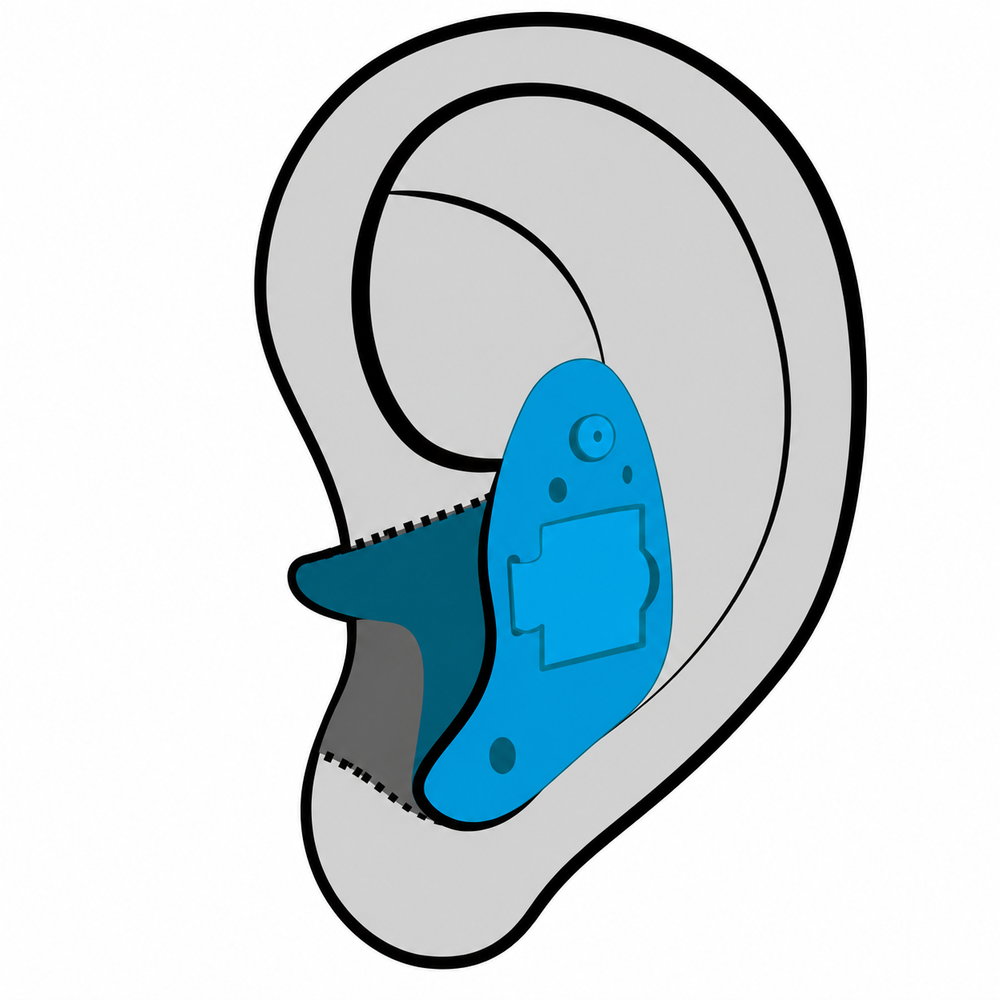
Custom-fit to sit partially inside the ear canal, ITC hearing aids are smaller and more discreet than ITE models while still accommodating directional microphones and wireless features. They work well for mild to moderate hearing loss and are a popular choice for patients who want a low-profile device without sacrificing connectivity or manual controls.
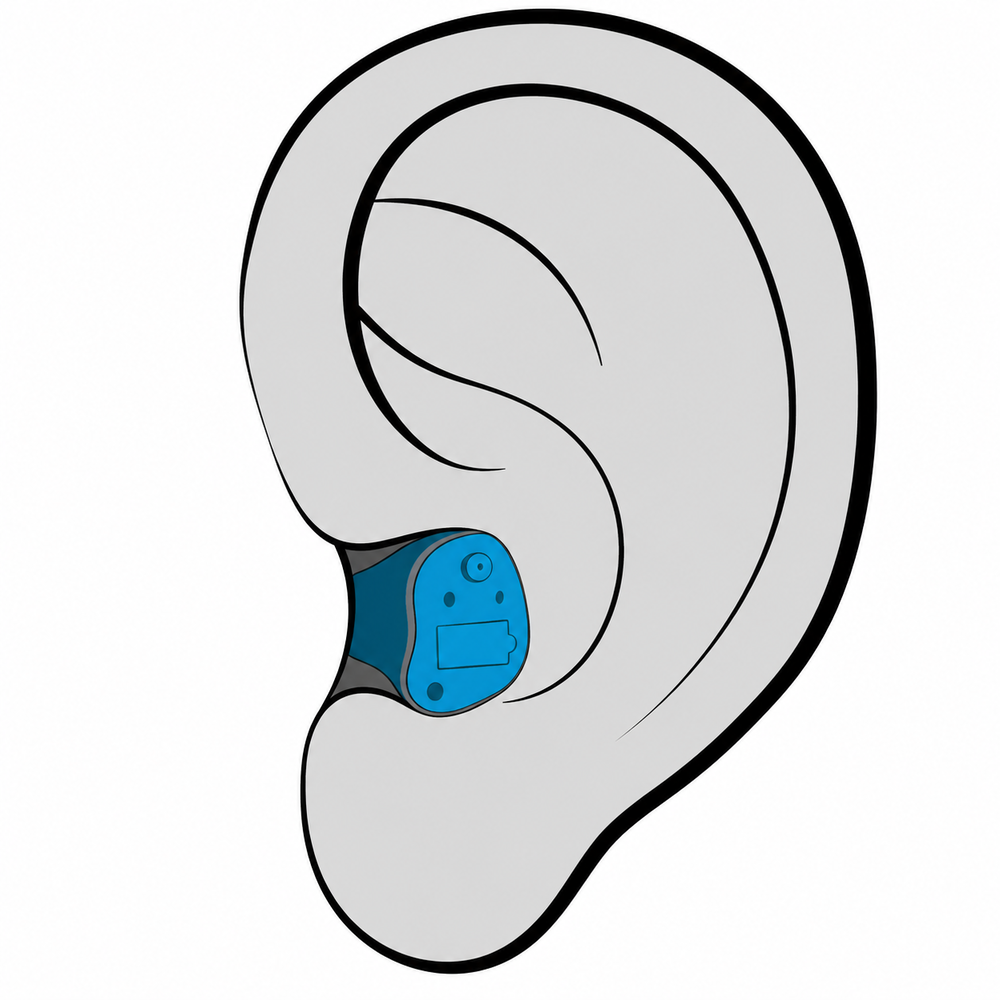
Completely-in-Canal (CIC)
Fitting entirely inside the ear canal, CIC hearing aids are very discreet with only a small removal handle visible at the opening. They're a popular choice for mild to moderate hearing loss when cosmetic appearance is the priority. Their compact size limits some advanced features, but many CIC models from leading manufacturers still support Bluetooth connectivity.
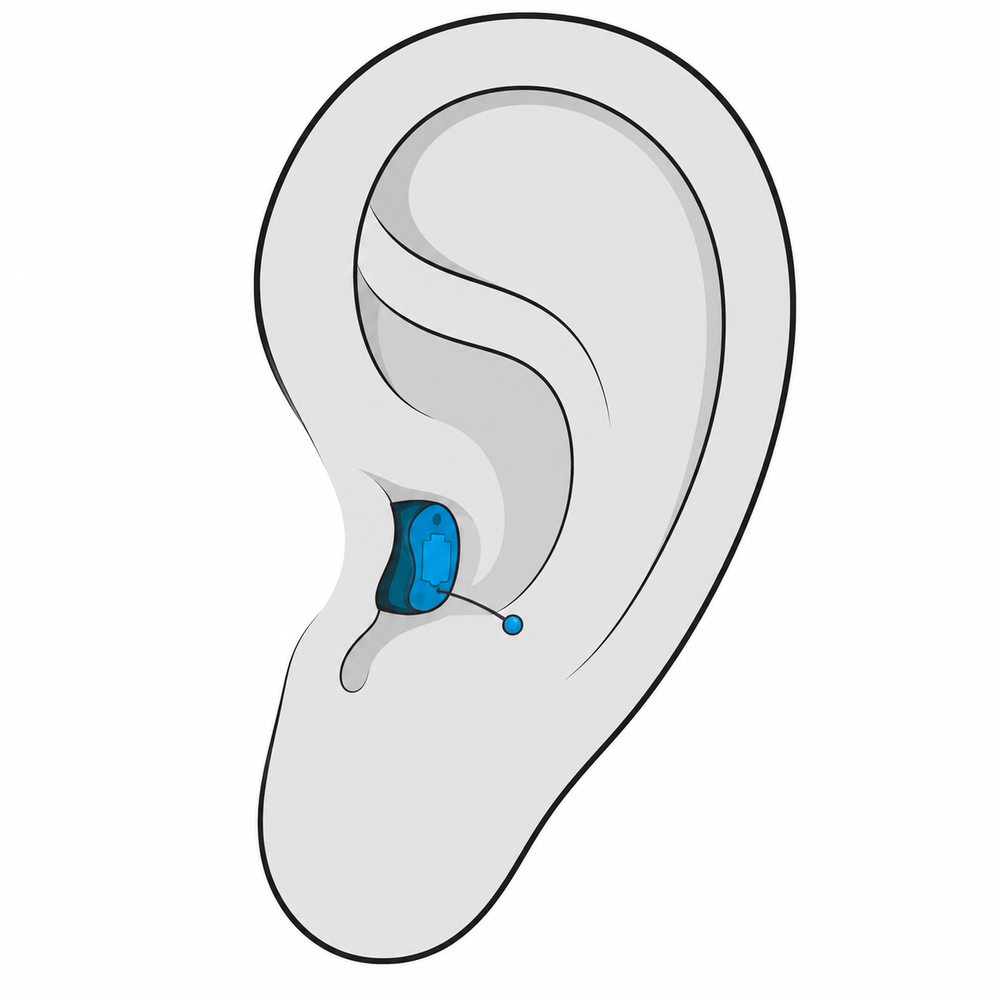
Invisible-in-Canal (IIC)
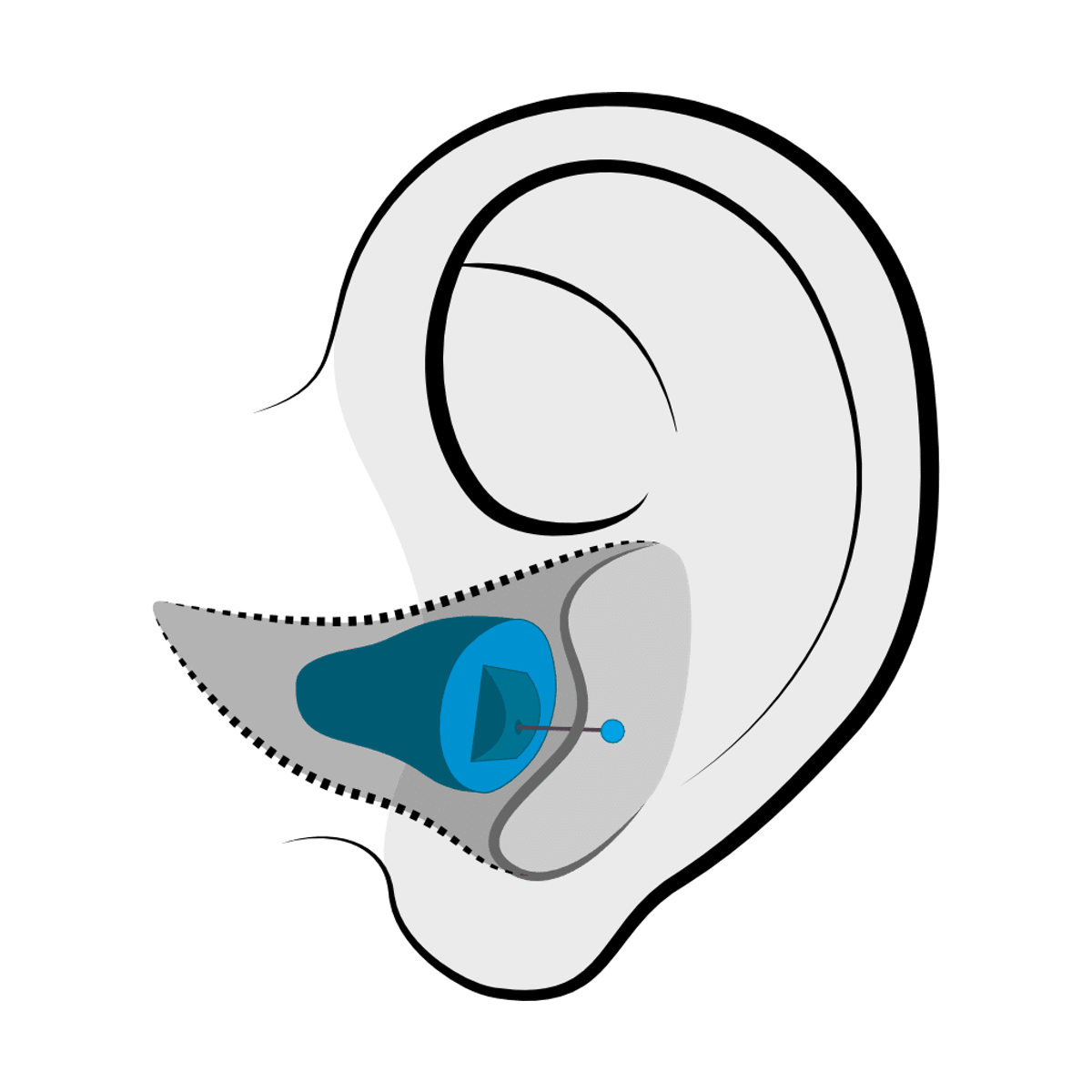
The smallest hearing aid available, IIC devices sit deep inside the ear canal and are virtually invisible to others. Best suited for mild to moderate hearing loss, they're removed daily with a small pull string. Candidacy depends on ear canal anatomy — your Doctor of Audiology will confirm fit during your evaluation. If maximum discretion is your top priority, this is the style to explore.
The AFA Promise to Every Patient
Whether you're here for a balance evaluation, a diagnostic hearing test, or a new set of hearing aids, you'll be cared for by credentialed clinicians using the same equipment that draws physician referrals from across the East Valley. Every new hearing aid fitting also includes a 45-day trial period, so you can wear your devices through real life in Mesa before you commit.
Answers for Dizziness and Hearing Loss in Mesa
Advanced balance testing and audiology care on Baseline Road, with most referrals seen within days.
Serving Mesa & the East Valley
Audiologist in Mesa, AZ
Our Mesa office on Baseline Road houses the full vestibular battery — rotational chair, posturography, VNG, vHIT, and VEMP — alongside complete diagnostic hearing care.
- Rotational chair and posturography, rare in Arizona
- Doctor of Audiology care at every step
- VA Community Care, Medicare, and AHCCCS accepted
- Referral appointments within days, sometimes same-day
- All major hearing aid brands, verified with Real Ear
- Serving Mesa and the East Valley since 2013
“Very helpful and willing to educate on what they’re doing as they go and make sure you understand, very patient highly recommend 😊 Went in very nervous, left feeling educated knowledgeable…”— Jon Howard, Google Review
AFA Balance & Hearing Institute
4838 E. Baseline Road, Suite #126, Mesa, AZ 85206
| Monday | 8:00 AM - 4:30 PM |
| Tuesday | 8:00 AM - 4:30 PM |
| Wednesday | 8:00 AM - 4:30 PM |
| Thursday | 8:00 AM - 4:30 PM |
| Friday | 8:00 AM - 4:30 PM |
| Saturday | Closed |
| Sunday | Closed |
Closed daily from 12:00 PM to 1:00 PM.
Get directionsHearing Aid Styles FAQs
Common questions about hearing aid styles in Mesa, including which sit deepest in the canal, where rechargeable options are available, CROS and BiCROS systems, and how a style gets chosen.
Invisible-in-canal (IIC) and completely-in-canal (CIC) devices are the smallest styles we fit in Mesa. They sit deep in the canal with only a small removal handle showing near the opening, and most people standing next to you will never notice them.
Both suit mild to moderate loss, generally to around 65 dB HL. The small housing leaves little room for directional microphones or larger batteries, so expect more frequent battery changes and fewer noise-management features.
ITC and full-shell ITE styles sit higher in the canal and ear bowl. They are easier to handle, hold more amplification for losses up to about 70 and 75 dB HL, and offer longer-lasting or rechargeable batteries.
Not quite every style. Rechargeable models are widely available across RIC, BTE, and full-shell ITE devices from the manufacturers we work with, and ITC options are starting to appear as cells get smaller. CIC and IIC housings are still too small for a rechargeable cell, so those styles run on disposable zinc-air batteries.
For patients who travel, who find tiny battery doors difficult, or who would rather drop the aids on a charger overnight, a rechargeable RIC often turns out to be the practical answer. We go through the battery trade-offs for each style that suits your hearing loss. Call (480) 265-8067 to talk it through.
CROS stands for contralateral routing of signal, and it is built for people with usable hearing in only one ear. A microphone worn on the poorer side picks up speech and sends it wirelessly to a device on the better ear, so conversation from your weak side stops disappearing.
BiCROS does the same thing and adds amplification when the better ear also has a loss of its own. Several of the manufacturers we work with make compatible models. If you have been told one ear cannot be aided, that is worth a second conversation. Call (480) 265-8067 and ask about candidacy.
Style selection here is a clinical decision rather than a sales conversation. Your Doctor of Audiology starts with the audiogram, since the degree and shape of the loss rules some styles out immediately, then looks at ear canal size, wax history, and how easily you can handle a small device.
After that it is about your life: whether you spend time in restaurants and meetings, how much you stream from a phone or television, and how strongly you feel about being seen wearing something. Because we are not tied to one manufacturer, the recommendation follows those answers. Every choice is then confirmed with Real Ear measurement at the fitting.