Rotary Chair Testing
What Rotational Chair Testing Measures
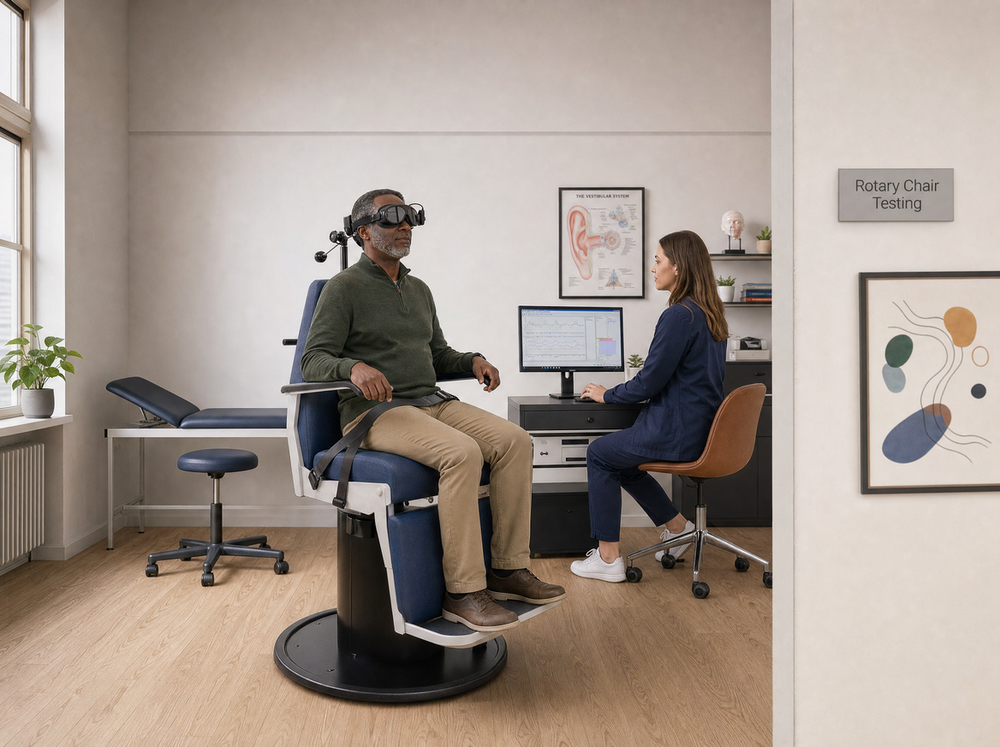
During rotary chair testing in Mesa, AZ, you sit in a computer-controlled chair inside a darkened booth while goggles track your eyes. The chair turns you smoothly at a range of speeds, and the recording shows how well your inner ear and eyes stay coordinated as head motion changes. You stay in contact with the audiologist throughout, and most patients find the movement gentler than they expected.
Why a Physician Orders Rotational Testing
Caloric testing stimulates one ear at a time at a single low frequency. That leaves gaps, particularly when both ears are damaged, when a patient cannot tolerate irrigations, or when a physician needs to track recovery after an inner ear injury. Rotational testing fills them by measuring the vestibulo-ocular reflex across many speeds. Few Arizona clinics own this equipment, and ours sits in Mesa.
Rotary Chair Testing FAQs
Common questions about rotary chair testing in Mesa, including what the chair actually does, whether it causes motion sickness, who needs it, and how it fits alongside a VNG.
Less than most people fear. The chair turns at controlled, predictable speeds in complete darkness, and the motion is smooth rather than abrupt. Some patients notice mild dizziness or a brief sense of turning after the chair stops, and a few feel queasy, but nausea at the level of caloric testing is uncommon.
You are harnessed in, the booth is monitored by camera and intercom, and the audiologist talks with you between runs. Testing pauses whenever you ask. Because a rare few feel unsteady afterward, we suggest bringing someone who can drive you home, especially if your dizziness has already caused a fall. Let us know at (480) 265-8067 if motion sickness is a particular worry for you.
It is usually ordered in addition to a VNG rather than instead of one. Physicians request it most often when both inner ears may be affected, when caloric results look normal but symptoms persist, when a patient cannot tolerate caloric irrigation, and when the question is how well the brain has compensated after a known vestibular loss.
Tracking change over time is another common reason. Because rotational testing is repeatable and comfortable, it suits patients being followed after an inner ear injury, during ototoxic drug monitoring, or through a course of vestibular rehabilitation. If your provider has not specified which tests they want, our referral coordinator will call their office and sort it out before you arrive.
Rotational testing on its own runs about 45 minutes to an hour, including setup and the rest periods between runs. Most patients are scheduled for it as part of a larger balance workup, so the full visit often lands between two and three hours.
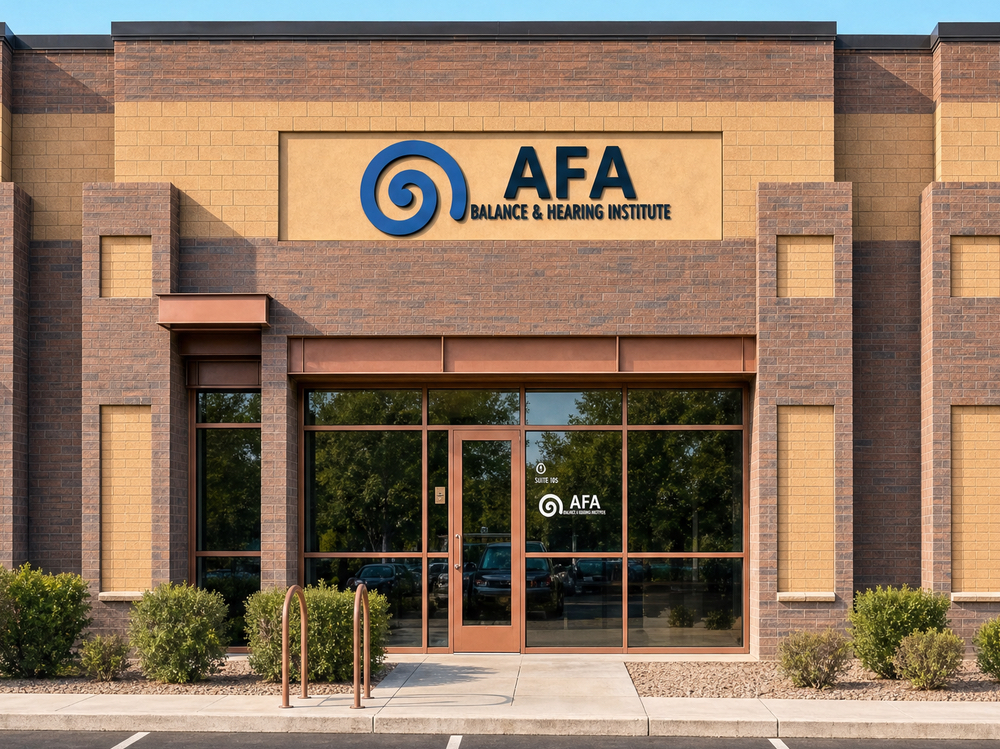
We tell people to keep the rest of the day loose. Bring a list of your current medications, wear comfortable clothing, and leave contact lenses at home if glasses are an option. Our office is in the Pierpont Commons complex at Suite #126, just west of Higley Road on Baseline, near Banner Gateway Medical Center.
A short clinical note is enough to get started: the symptom history, how long the dizziness has been going on, any prior vestibular testing or imaging, and the specific question you want answered. If a VNG has already been done elsewhere, send those tracings so we can compare rather than repeat.
Once a referral reaches us, patients are typically scheduled within a few days, sometimes the same day when someone is at risk of falling. After the visit, the written results and an interpretation report go back to the referring office. Physicians who want to discuss a case before ordering can reach the clinic at (480) 265-8067.
The AFA Promise to Every Patient
Whether you're here for a balance evaluation, a diagnostic hearing test, or a new set of hearing aids, you'll be cared for by credentialed clinicians using the same equipment that draws physician referrals from across the East Valley. Every new hearing aid fitting also includes a 45-day trial period, so you can wear your devices through real life in Mesa before you commit.
Patient Stories
See what Mesa and East Valley patients say about the balance testing and hearing care they received at AFA.
Answers for Dizziness and Hearing Loss in Mesa
Advanced balance testing and audiology care on Baseline Road, with most referrals seen within days.
Serving Mesa & the East Valley
Audiologist in Mesa, AZ
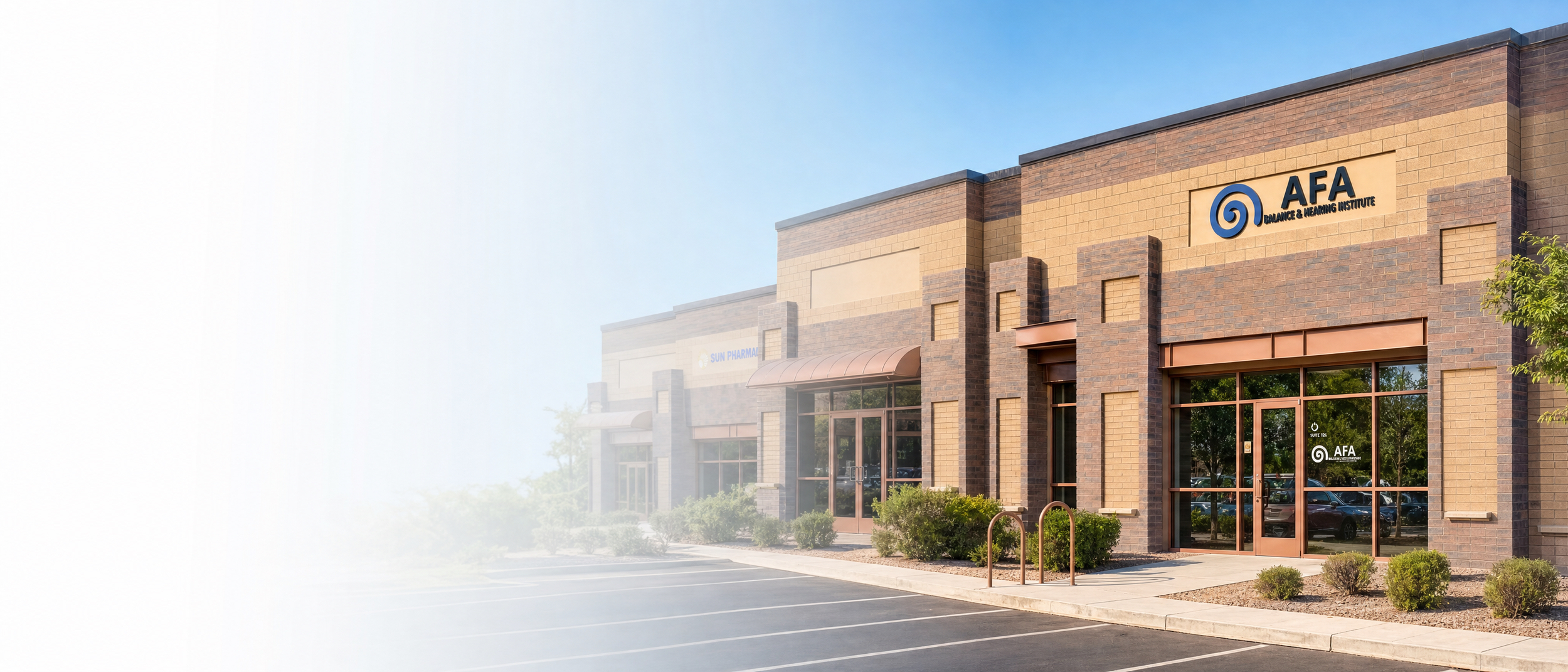
Our Mesa office on Baseline Road houses the full vestibular battery — rotational chair, posturography, VNG, vHIT, and VEMP — alongside complete diagnostic hearing care.
- Rotational chair and posturography, rare in Arizona
- Doctor of Audiology care at every step
- VA Community Care, Medicare, and AHCCCS accepted
- Referral appointments within days, sometimes same-day
- All major hearing aid brands, verified with Real Ear
- Serving Mesa and the East Valley since 2013
“Very helpful and willing to educate on what they’re doing as they go and make sure you understand, very patient highly recommend 😊 Went in very nervous, left feeling educated knowledgeable…”— Jon Howard, Google Review
AFA Balance & Hearing Institute
4838 E. Baseline Road, Suite #126, Mesa, AZ 85206
| Monday | 8:00 AM - 4:30 PM |
| Tuesday | 8:00 AM - 4:30 PM |
| Wednesday | 8:00 AM - 4:30 PM |
| Thursday | 8:00 AM - 4:30 PM |
| Friday | 8:00 AM - 4:30 PM |
| Saturday | Closed |
| Sunday | Closed |
Closed daily from 12:00 PM to 1:00 PM.
Get directions